The genetic make-up of over 2,500 individuals with glaucoma was studied, characterising a number of common and rare genetic changes associated with glaucoma.
In less than 5% of individuals, glaucoma was associated with a rare genetic change in one of four genes. In a much larger proportion of individuals, glaucoma was associated with the combined effect of thousands of common genetic changes. These common changes collectively conferred a similar glaucoma risk as a rare genetic change which is already tested in the clinic.
Given that glaucoma is asymptomatic in its early stages, early detection is critical, although there is currently a lack of reliable screening methods. The findings of this research suggest that testing for common genetic changes may become a valuable method for detecting people at highest (and lowest) risk of glaucoma, allowing higher-risk individuals to be monitored earlier and more frequently, and lower-risk individuals later and less frequently. Together with industry partners, Dr Siggs and his colleagues are now translating these findings into a glaucoma ‘polygenic risk score’ for testing in clinical trials.
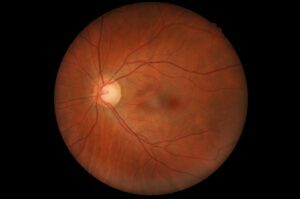
Image below: the retina from a patient with glaucoma, showing the characteristic enlargement of the optic nerve ‘cup’ (pale white circle) due to damage from glaucoma.