Diverse communities of microbes colonise our respiratory system (the respiratory microbiota (RM)) and increasing evidence suggests a role for RM in respiratory health. For example, the RM composition in humans correlates to the presence and severity of viral infection, suggesting that microbes within the RM may directly influence viral infection susceptibility and severity. Viral infections are common exacerbators of lung disease like chronic obstructive pulmonary disease (COPD). If specific microbial species or combinations species can decrease the risk or severity of human rhinovirus (HRV)infection, they could be used as a novel preventative treatment for COPD exacerbations.
Models are needed to test these hypotheses, however animal models of viral infection come with their own microbiome which may influence the outcomes, and germ free models have significantly altered immune systems. In this project Dr Burke ‘s team proposed to develop a cell culture model (which are normally grown without bacteria) for testing the effect of the microbiome on viral infection.
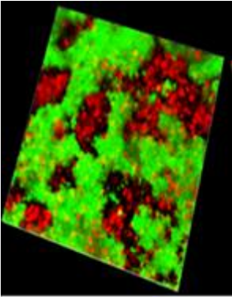
Dr Burke modified an existing model that uses human lung cells grown in a way that resembles the lining of the respiratory tract, the respiratory epithelium. It was established that bacteria could grow on the surface of these cells in combinations of one to four different species for three days without causing any negative effects to the epithelial layer. A method was developed to accurately quantify each species from the simulated microbiomes on the epithelial model and showed that different combinations of bacterial species stimulated different immune responses from the human cells. This effectively mimicked the presence of the microbiome in the respiratory tract and confirmed that differences in the effects of the microbiome on the epithelium could be measured.
The model was then used to test the impacts of simulated microbiomes (different combinations of bacteria from the respiratory microbiome) on the ability of HRV to infect human cells. It was found that while individual bacterial species did not change viral infection levels, particular combinations of bacterial species reduced the number of virus particles detected. The stimulation of inflammation had an impact on the simulated microbiome was tested, and found that the same combination of bacteria appeared to modulate the immune response of the epithelial cells compared to individual species in the presence of inflammation.
These results show that this model is a useful tool to study the impact of multiple bacterial species on respiratory diseases without the confounding influence of the microbiomes already present in animal models. This enables future experiments to determine which species of the microbiome do impact viral infection, which could lead to preventative treatments to reduce exacerbations in COPD.