Hepcidin is a low molecular weight endocrine hormone that regulates the absorption and availability of iron within the human body. Excessive production of hepcidin reduces iron levels in the body, thereby hindering blood production and causing debilitating anaemia. A critical example is the anaemia of chronic disease (ACD) that is seen in >80% of hospitalised patients around the World. ACD is a significant cause of morbidity and mortality in millions of patients afflicted by neoplastic, inflammatory or infectious disorders. The chronic inflammation from the underlying disease leads to excessive hepcidin production and thereby induces a chronic anaemia.
Current treatments for ACD is cumbersome, ineffective or expensive, and do not target the excessive hepcidin that is causing the anaemia. My recent research discovered that hepcidin is specifically bound and transported in the blood by the protein α2-macroglobulin. This binding enables sequestration and transport of hepcidin in the circulation that is vital for modulating the function of this hormone. Moreover, my studies also found that hepcidin bound to α2-macroglobulin is spared from urinary excretion and thereby maintained its bioactivity. However, this binding is also labile and therefore can be targeted as a novel treatment strategy.
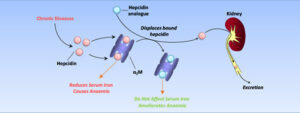
With this knowledge, Dr Huang hypothesised that analogues of hepcidin which are able to bind α2- macroglobulin but do not possess hepcidin activity, could be an effective therapeutics for treating ACD. This competition would release hepcidin from α2-macroglobulin, and thereby induce its urinary excretion and restore blood iron level.
Dr Huang’s research has been successful in generating and identifying novel competing analogues of hepcidin that showed great promise. He has identified a small conserved region within the hepcidin sequence that is essential for hepcidin binding to α2-macroglobulin but do not possess hepcidin activity. Hepcidin analogues from this region, including small tripeptide analogues, are highly effective at competing with hepcidin for binding to α2-macroglobulin, and negating the effects of hepcidin and increasing serum iron in animal models. Importantly, these analogues are safe and highly tolerable in animal models.